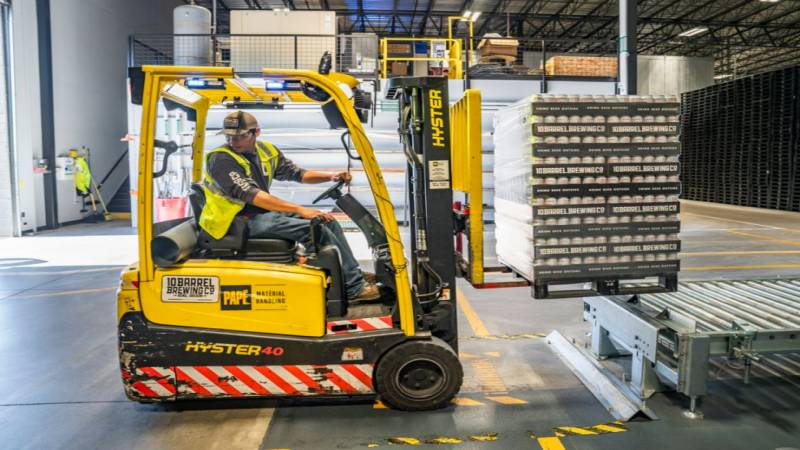
Heavy equipment isn’t exactly known to gently move across a floor. Forklifts, pallet jacks, and trolleys rolling back and forth the whole day can lead to tiny cracks. Concrete may also begin to dust and uneven patches may appear.
But anyone who’s spent time around busy sites knows how small surface issues turn into bigger, disruptive problems later on. Thankfully, there’s epoxy flake flooring.
The Pressure Points: Why Heavy Equipment Is So Tough on Floors
Floors in heavy-duty spaces don’t just get walked on; they get worked on. Every movement from machinery adds a different kind of stress, and it builds up fast. Floors in warehouses and project sites are constantly subjected to:
- Constant rolling weight from forklifts and pallet movers
- Point loads from parked machinery or racking systems
- Abrasive movement from repeated turning and braking
After a while, traditional concrete starts to show it. You’ll see dusting on the surface, small chips along travel paths, and little pits where weight has concentrated too often. It’s the kind of wear you’ve probably spotted in older warehouses where the floor looks tired, even if everything else is still running fine.
How Epoxy Flake Flooring Handles Constant Load Stress
Instead of leaving concrete to take all the punishment on its own, epoxy flake flooring creates a bonded surface layer that helps distribute weight more evenly across the slab. So rather than pressure hitting one tiny spot, it gets spread out a bit more naturally.
The flake system also adds body to the surface, building up thickness and giving the floor a tougher, more resilient finish. That makes a noticeable difference in how the floor feels under heavy machinery.
Bare concrete often has that hollow, slightly rough feel after years of use, while epoxy flake flooring tends to feel more solid and consistent underfoot. A bit like the difference between stepping on uneven ground versus a properly compacted track, everything just rolls a bit smoother.
Impact Resistance and Safety Under Pressure
In heavy equipment environments, things get dropped, loads shift, and machinery doesn’t always stop with perfect precision. Epoxy flake flooring handles sudden knocks, thanks to its layered structure. It absorbs minor shocks and helps reduce surface damage that would normally turn into chips or cracks.
All the improvements add up. You’ll experience less slipping, fewer surface repairs, and a floor that doesn’t flinch every time something heavy lands on it.
Maintenance, Downtime, and Everyday Cleanliness
Busy workspaces don’t stay clean for long, especially where machinery is involved. Oil drips, dust trails, and general wear can build up quickly if the surface isn’t up to scratch.
Epoxy flake flooring helps keep things more manageable because it’s seamless. There are no joints, cracks, or little pockets for grime to settle into. That alone makes cleaning a lot more straightforward and cuts down the time spent chasing dirt around the floor.
Nobody enjoys spending half a day scrubbing concrete when there’s actual work to be done. A smoother surface just means fewer interruptions, which keeps operations moving without unnecessary downtime.
Installation Prep: Why the Base Layer Still Matters
Even the best flooring system won’t perform properly if the groundwork isn’t done right. It all starts underneath. Surface preparation usually involves grinding the concrete, checking for moisture, and repairing any existing damage before anything else goes down.
Skipping these steps is a bit like building on shaky ground. The finish might look fine at first, but under heavy use, weaknesses tend to show up sooner than expected.
Choosing the Right System for Heavy-Duty Areas
Not all epoxy systems are designed for heavy machinery zones. Some are more decorative, while others are built specifically for high-load environments. Knowing the difference matters more than most people think.
Things like load type, how often equipment is moving, and exposure to oils or moisture all play a role in choosing the right setup. This is where things get specific, and it’s worth getting right the first time rather than revisiting it later.
In the end, flooring is part of how a site runs. Epoxy flake flooring brings a practical balance of strength, stability, and ease of maintenance that suits heavy equipment environments well.See More